Water
By: SNEHA SINGH 27 Jan 2025 17:12:16
Water
Water is a unique and essential substance with several important properties that make it vital for life and various processes. The attractive forces between water molecules and the slight tendency of water to ionize are of crucial importance to the structure and function of biomolecules. Here are its key properties:
Figure: Structure of the water molecule.Physical properties
Polarity: Water molecules are polar, with a partial positive charge on the hydrogen atoms and a partial negative charge on the oxygen atom. This polarity leads to hydrogen bonding.
Cohesion: Water molecules stick to each other due to hydrogen bonding. This property contributes to surface tension.
Adhesion: Water molecules can stick to other polar substances. This helps in processes like capillary action, where water moves against gravity in narrow spaces.
High Surface Tension: The cohesive forces between water molecules create a "skin" on its surface, allowing small objects (like insects) to float.
Density Anomaly: Water is most dense at 4°C and becomes less dense as it freezes. This is why ice floats on water.
High Specific Heat Capacity: Water can absorb or release large amounts of heat without a significant temperature change, which stabilizes climates and body temperatures.
High Heat of Vaporization: It takes a lot of energy to convert water from liquid to gas, which aids in cooling processes, like sweating.
Universal Solvent: Water dissolves many substances due to its polarity, making it essential for biological and chemical processes.
Transparent: Water allows light to pass through, supporting aquatic ecosystems by enabling photosynthesis.
Boiling and Freezing Points: Water boils at 100°C (212°F) and freezes at 0°C (32°F) under standard atmospheric pressure.
Chemical Properties
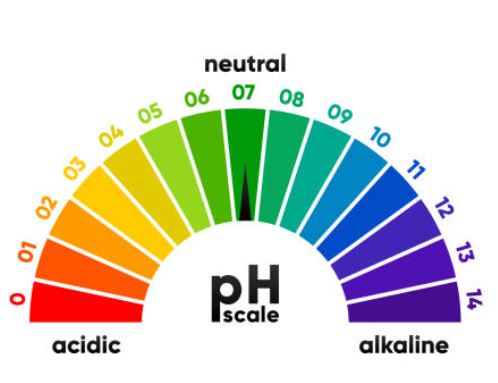
Neutral pH: Pure water has a pH of 7, making it neither acidic nor basic.
Hydrolysis: Water participates in hydrolysis reactions, breaking down compounds by reacting with them.
Oxidation and Reduction: Water can act as a reducing agent (providing electrons) or an oxidizing agent (accepting electrons).
Amphoteric Nature: Water can act as both an acid and a base, reacting with acids and bases depending on the situation.
Biological Importance
Temperature Regulation: Water helps maintain body temperature and cools the body through perspiration.
Transport Medium: Water is vital for transporting nutrients, gases, and waste products in organisms.
Chemical Reactions: Water is a reactant in many biological processes, including photosynthesis and cellular respiration.
Structural Role: Water provides turgidity to plant cells and is a key component of cytoplasm.
- Weak Interactions in Aqueous Systems
- Hydrogen Bonding Gives Water Its Unusual Properties
FIGURE 2-2: Hydrogen bonding in ice. In ice, each water molecule forms four hydrogen bonds, the maximum possible for a water molecule, creating a regular crystal lattice. By contrast, in liquid water at room temperature and atmospheric pressure, each water molecule hydrogen bonds with an average of 3.4 other water molecules. This crystal lattice structure makes ice less dense than liquid water, and thus ice floats on liquid water.
- Water Forms Hydrogen Bonds with Polar Solutes
- Hydrogen bonds are not unique to water. They readily form between an electronegative atom (the hydrogen acceptor, usually oxygen or nitrogen) and a hydrogen atom covalently bonded to another electronegative atom (the hydrogen donor) in the same or another molecule
FIGURE 2-3 Common hydrogen bonds in biological systems.
- Water Interacts Electrostatically with Charged Solutes
FIGURE 2-6: Water as solvent.
- Entropy Increases as Crystalline Substances Dissolve
- Nonpolar Gases Are Poorly Soluble in Water
- Nonpolar Compounds Force Energetically Unfavorable Changes in the Structure of Water
FIGURE 2-7: Amphipathic compounds in aqueous solution. van der Waals Interactions Are Weak Interatomic Attractions
- Weak Interactions Are Crucial to Macromolecular Structure and Function