pH
By: SNEHA SINGH 27 Jan 2025 17:57:46
pH : pH measures the concentration of hydrogen ions (H+H^+) in a solution, indicating its acidity or alkalinity.
pH=−log?10[H+]\text{pH} = -\log_{10}[\text{H}^+]
-
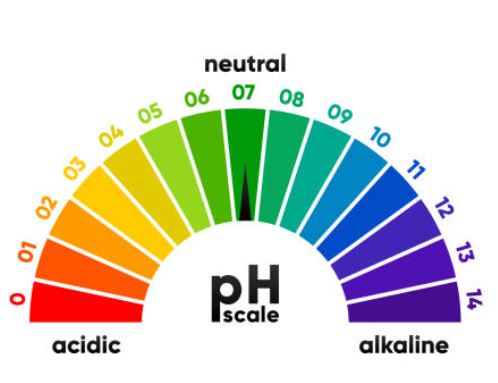
Scale:
- Ranges from 0 to 14.
- pH < 7: Acidic (higher H+H^+ concentration).
- pH = 7: Neutral.
- pH > 7: Basic/alkaline (lower H+H^+ concentration).
-
Examples:
- Acidic: Lemon juice (~2), Vinegar (~3).
- Neutral: Pure water (7).
- Basic: Baking soda (~9), Ammonia (~11).
-
-
Importance:
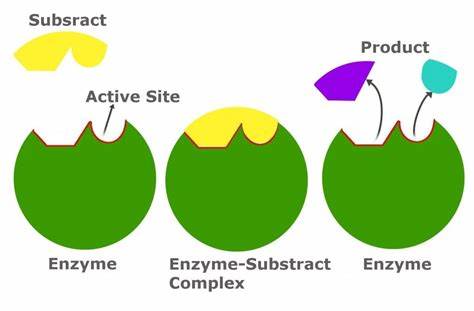
- Biological: Enzyme activity and metabolic processes depend on a specific pH (e.g., blood pH is ~7.4).
- Environmental: pH affects soil fertility and aquatic ecosystems.
- Industrial: Used in chemical manufacturing and food processing.
-
Buffers:
- Maintain a stable pH in a system by neutralizing acids or bases.
- Example: Bicarbonate buffer system in blood.
-
Calculation:
- For strong acids/bases: pH=−log?[H+]pH = -\log[\text{H}^+].
- For weak acids/bases: Use KaK_a or KbK_b to find H+H^+, then calculate pH.
Quick Facts:
- The pH scale is logarithmic: a change of 1 pH unit equals a tenfold change in H+H^+ concentration.
- Indicators: Substances like litmus paper or phenolphthalein are used to visually detect pH changes.