Metabolism of carbohydrates
By: SNEHA SINGH 02 Feb 2025 10:31:04
Metabolism of Carbohydrates: Notes
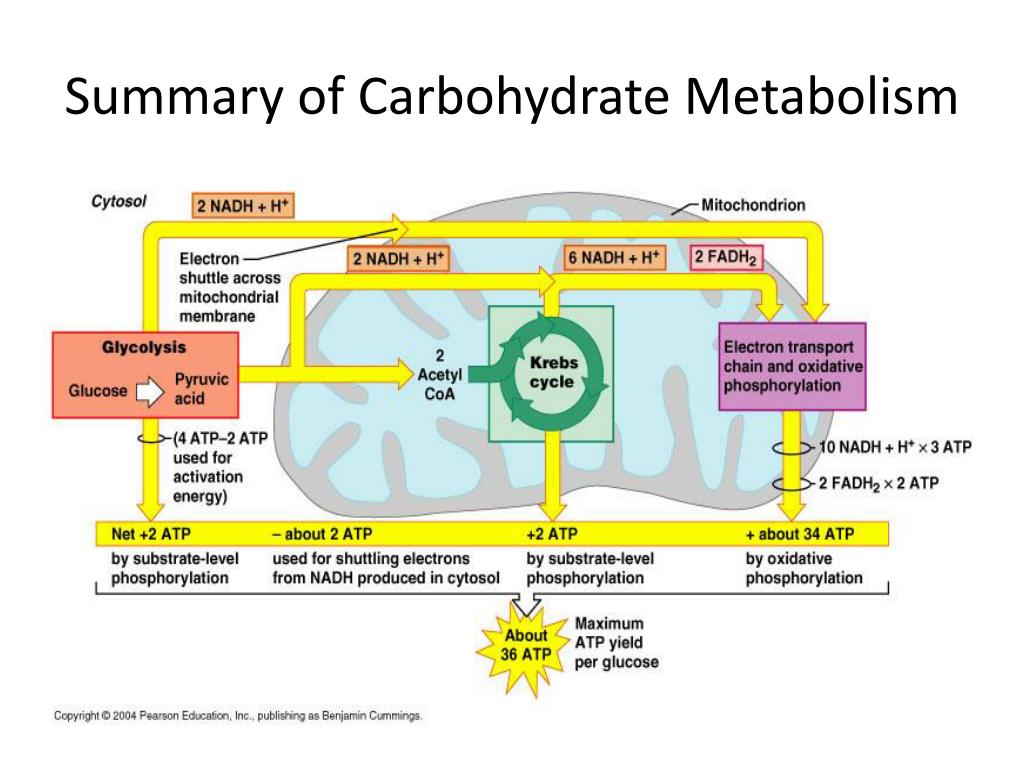
1. Glycolysis (Embden-Meyerhof Pathway)
- Location: Cytoplasm
- Purpose: Converts glucose (6C) → pyruvate (3C) to generate ATP and NADH.
- Phases:
- Preparatory Phase (Investment Phase)
- Uses 2 ATP
- Converts glucose → fructose-1,6-bisphosphate
- Payoff Phase (Energy Generation Phase)
- Produces 4 ATP, 2 NADH, and 2 pyruvate
- Preparatory Phase (Investment Phase)
- Net Yield: 2 ATP, 2 NADH, 2 Pyruvate
2. TCA Cycle (Krebs Cycle, Citric Acid Cycle)
- Location: Mitochondrial matrix
- Purpose: Completes oxidation of acetyl-CoA → CO?, producing NADH and FADH?.
- Key Steps:
- Acetyl-CoA + Oxaloacetate → Citrate
- Decarboxylation → CO? release
- Energy capture as 3 NADH, 1 FADH?, 1 GTP (ATP equivalent) per cycle
- Net Yield (Per Glucose, i.e., 2 Turns of Cycle):
- 6 NADH, 2 FADH?, 2 ATP (GTP), 4 CO?
3. Glyoxylate Cycle (Modified TCA in Plants & Bacteria)
- Location: Glyoxysomes (plants) & some bacteria
- Purpose: Enables conversion of fats → carbohydrates by bypassing CO? release steps.
- Key Features:
- No CO? release (uses isocitrate lyase & malate synthase)
- Acetate → Succinate → Glucose (via gluconeogenesis)
- Important in: Seed germination (conversion of stored fats to sugars).
4. Electron Transport Chain (ETC) & Oxidative Phosphorylation
- Location: Inner mitochondrial membrane
- Purpose: Uses NADH & FADH? to generate ATP via oxidative phosphorylation.
- Key Components:
- Complex I (NADH dehydrogenase) – Transfers electrons from NADH to CoQ.
- Complex II (Succinate dehydrogenase) – Transfers electrons from FADH? to CoQ.
- Complex III (Cytochrome bc1 complex) – Transfers electrons from CoQ to cytochrome c.
- Complex IV (Cytochrome c oxidase) – Transfers electrons to O?, forming H?O.
- ATP Synthase (Complex V) – Uses proton gradient to synthesize ATP.
- Yield per Glucose:
- Each NADH → 2.5 ATP
- Each FADH? → 1.5 ATP
- Total: ~32-34 ATP per glucose